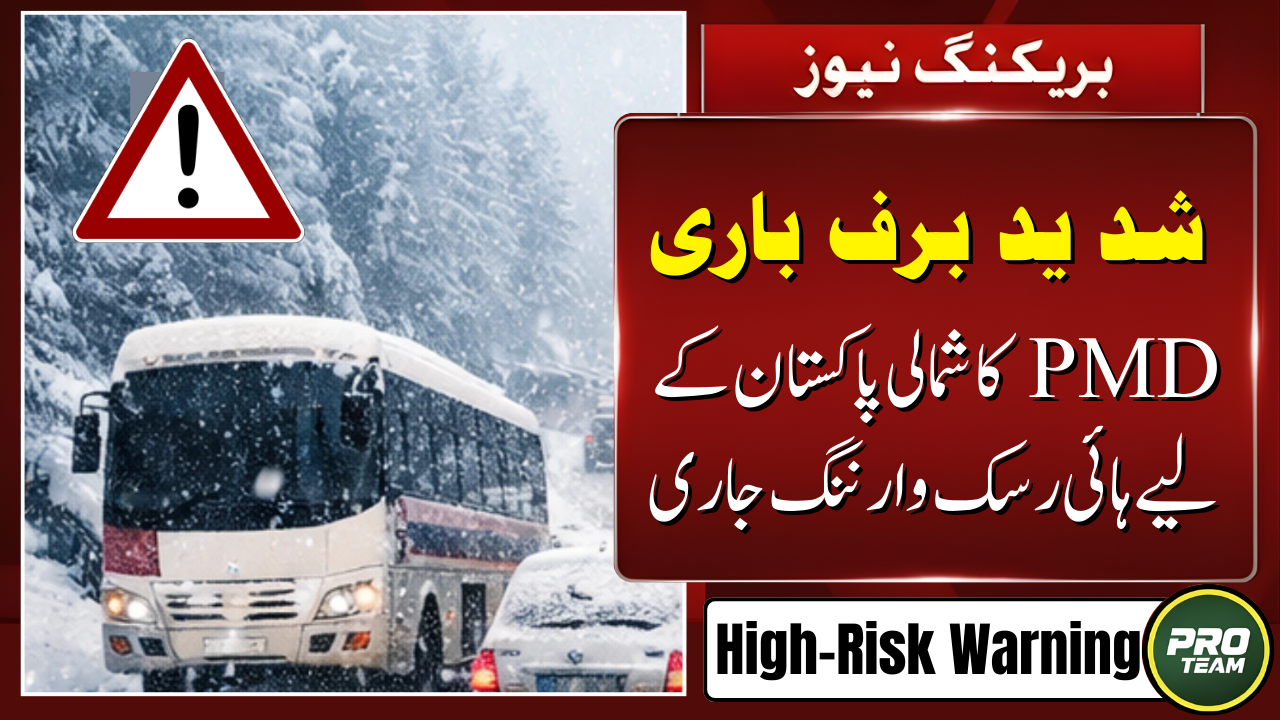
The Pakistan Meteorological Department (PMD) has issued a critical high-risk warning for life-threatening landslides and avalanches in the upper regions of Khyber Pakhtunkhwa, Kashmir, and Gilgit-Baltistan. This urgent alert comes as heavy rain and snowfall continue to batter the mountainous areas, significantly increasing the danger for residents and travelers. If you are in these regions, immediate precautionary action is essential.
This is not a routine weather update; it is a serious advisory predicting Snow & Avalanche Alert conditions that can disrupt communities, block major highways, and pose a direct threat to life and property. Authorities are urging extreme caution and advising against all non-essential travel to the affected zones.
Read More! Rescue 1122 Jobs 2026
Alert Summary:
| Region | Primary Risk | Severity Level |
|---|---|---|
| Upper Khyber Pakhtunkhwa (e.g., Chitral, Dir, Swat) | Landslides, Road Blockages | High |
| Azad Jammu & Kashmir (Neelum Valley, Jhelum Valley) | Avalanches, Landslides | High to Very High |
| Gilgit-Baltistan (Hunza, Skardu, Ghizer, Astore) | Avalanches, Glacial Lake Flooding | Very High |
| Karakoram & Himalayan Ranges | Major Avalanche Risk | Extreme |
| Major Highways (Karakoram Highway, N-35) | Blockages, Travel Disruption | High |
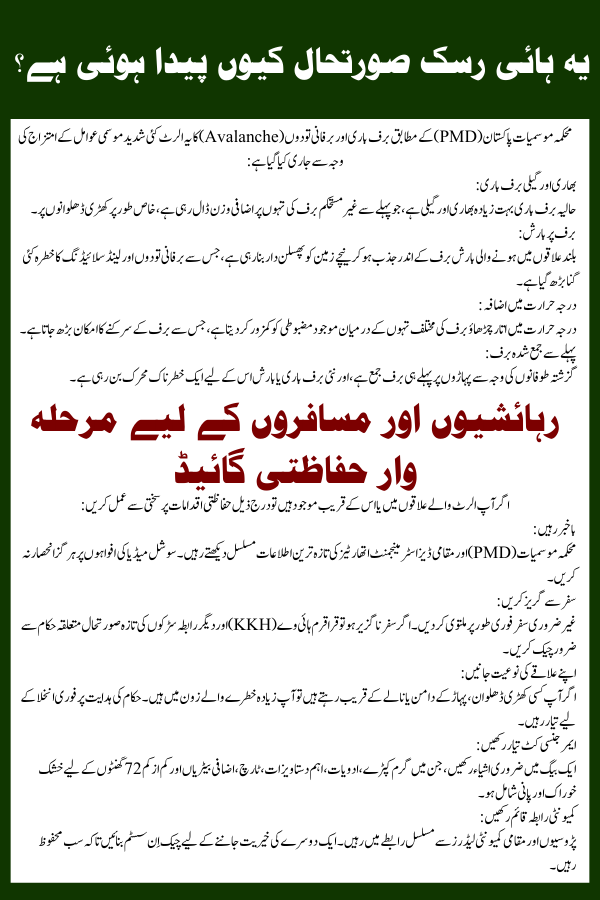
What is Causing This High-Risk Situation?
The PMD has attributed this Snow & Avalanche Alert to a combination of severe weather factors:
- Heavy, Wet Snowfall: Recent snow is dense and heavy, adding immense weight to already unstable snowpacks on steep slopes.
- Rain on Snow: Rainfall at higher elevations is percolating through the snow, lubricating the ground beneath and drastically increasing the risk of slab avalanches and landslides.
- Rising Temperatures: Fluctuating temperatures can weaken the bond between different snow layers, making them prone to sliding.
- Previous Snow Accumulation: Existing snow from earlier storms has already loaded the mountainsides, and new precipitation is acting as a triggering agent.
Step-by-Step Safety Guide for Residents and Travelers
If you are in or near the warned areas, follow this critical safety protocol:
- Stay Informed: Continuously monitor updates from the PMD and your local disaster management authorities. Avoid relying on social media rumors.
- Avoid Travel: Postpone all non-essential travel immediately. If you must travel, check the live status of the Karakoram Highway (KKH) and other link roads with the authorities.
- Know Your Zone: If you live in a village on a steep slope, at the base of a mountain, or near a drainage channel, you are in a higher-risk area. Be prepared to evacuate if advised.
- Prepare an Emergency Kit: Have a bag ready with essentials: warm clothes, medicines, important documents, flashlights, batteries, and non-perishable food/water for at least 72 hours.
- Community Communication: Stay in touch with neighbors and local community leaders. Establish a check-in system to ensure everyone’s safety.
Read More! 8171 Ehsaas Program 14500 Payment
What to Do During an Avalanche or Landslide Event
| If You Are Indoors | If You Are Outdoors or Driving |
|---|---|
| Move to the highest floor of your home if possible. | Do not try to outrun a Snow & Avalanche Alert. Move sideways to get out of its path. |
| Stay away from windows and glass doors. | If caught, try to “swim” to stay on the surface. Create an air pocket in front of your face as you come to a stop. |
| Listen for unusual sounds like trees cracking or boulders knocking. | If in a vehicle, abandon it immediately if you see or hear a landslide/avalanche coming. |
| Be ready to evacuate quickly if ordered by local authorities. | Never cross a road that has been blocked by debris or flowing mud. |
Official Resources and Helplines
For accurate information and emergency assistance, contact only official sources:
- Pakistan Meteorological Department (PMD): For official weather warnings and advisories. Check their website.
- National Disaster Management Authority (NDMA): For disaster preparedness guidelines and updates.
- Provincial Disaster Management Authorities (PDMAs): Contact the PDMA of Khyber Pakhtunkhwa, Gilgit-Baltistan, or Azad Kashmir for local instructions and helplines.
- Local Police and Administration: They will relay evacuation orders and coordinate rescue efforts.
Read More! Pakistan Weather Latest Update 2026
How to Check Road Status and Weather Updates?
- Tourism & Police Helplines: Each region (GB, KP) has dedicated tourist police helplines that provide road condition updates.
- Official Social Media: Follow verified accounts of the GB Police, KPK Police, and relevant district administrations on platforms like Twitter/X for real-time alerts.
- Avoid Mountain Travel Apps: Do not trust general navigation apps like Google Maps for avalanche-prone area routes during such alerts.
Conclusion
The PMD’s Snow & Avalanche Alert is a serious call for immediate action. The combination of heavy rain and snow has created a volatile and dangerous situation in Pakistan’s northern territories. Safety must be the absolute priority. Residents should prepare emergency kits and follow official instructions, while travelers must postpone their journeys. By staying informed through official meteorological and disaster management channels and exercising extreme caution, lives and property can be protected from these natural hazards.
This article is for informational purposes only. SmartFixers.pk is not an official government website and is not affiliated with any government department. Readers are advised to verify all information from official government sources before taking any action.
Our editorial team publishes original and informational content for educational purposes only.
Related Posts